Have You Signed Up For Your Free Business Listing?

Signing Up Takes Less Than 1 Minutes And It Is Totally Free!
Click Here To Create Your Free Business Listing

Pensacola Restaurants Serving Up Thanksgiving Meals

Pensacola Restaurants Serving Up Thanksgiving Meals

Find your perfect Thanksgiving meal at a local Pensacola restaurant!

With Thanksgiving less than a week away, everyone seems to be finalizing their plans for this festive, food-oriented holiday, including some of our local restaurants! So for those of you who have yet to decide what table you’ll be gathering around this year, don’t fret. There are plenty of local options where you will be able to dive into a tasty Thanksgiving meal. Take a look at some of the options listed below, you’re sure to find a choice that will make the whole family happy.


Five Sisters Blues Café

5 sisters blues cafe

Five Sisters, well known for their southern cooking, will be open this Thanksgiving offering four seating times, 11:00 a.m., 1:00 p.m., 3:00 p.m., and 5:00 p.m. They are serving a traditional Thanksgiving menu of three courses at a fixed price of $21.95 for adults, and $12.95 for children. The appetizer will be a choice between crab bisque or house salad, followed by a traditional Thanksgiving plate, ending with a choice dessert, either homemade chess pie or sweet potato pie. The Thanksgiving plate they will be serving comes loaded with herb-brined sliced turkey breast, bourbon-glazed ham, green beans, mashed potatoes, yams, cornbread dressing, and a dinner roll. Reservations are required, so be sure to call 850-912-4856 ahead of time!

In addition to the plated meal, Five Sisters is offering a Thanksgiving Grab and Go service, based on a six-person meal, with a price of $60 plus tax. This meal includes: a 6 lb. turkey, green bean casserole, garlic mashed potatoes, sausage and cornbread dressing, cranberry sauce, brown gravy, and dinner rolls. This package does require that orders be placed ahead of time. Five Sisters will be taking orders until 12 p.m. Monday, November 19th, with pickups starting at 3:00 p.m. Wednesday, November 21st. Call the Catering Manager, Lauren Smith, at 850-516-2324, or email lauren@fiivesistersbluescafe.com to place your order. You can also find more information on their Facebook events page, here.


The Pensacola Fish House

fish house

Another local favorite, Fish House, will open its doors for us this Thanksgiving. They will open at 11:00 a.m., and will be serving their regular menu all day, in addition to a Thanksgiving turkey plate priced at $24, which they will be serving from 11:00 a.m. to 5:00 p.m.

Their turkey plate will be served with all the trimmings, including a slow-roasted garlic and herb turkey breast, southern Applewood-smoked bacon cornbread dressing, green bean casserole, apple and cranberry chutney, whipped garlic mashed potatoes, and homemade giblet gravy. Reservations aren’t required, but are highly recommended! To reserve your table, call 850-470-0003, or check out their Facebook event page here.


Jackson’s Steakhouse

Thanksgiving Day at Jackson's

Located downtown, Jackson’s Steakhouse plans to serve up a delicious Thanksgiving meal this upcoming holiday. They will be open 11:00 a.m. to 6:00 p.m., and will be serving a traditional Thanksgiving plate, alongside their new fall menu. This Thanksgiving plate comes filled with classic favorites, such as oven-roasted sliced turkey, served with garlic buttered green beans, andouille and cornbread stuffing, Anjou pear and cranberry relish, Yukon gold and fresh thyme whipped potatoes, roasted butternut squash, and homemade gravy, all for the price of $29. Call 850-469-9898 to make reservations or check out their Facebook event page, here for more information.


Skopelos at New World – Menu

Skopelos at New World
Skopelos plans to celebrate this Thanksgiving with a feast of their own! They will be open Thanksgiving day from 11 a.m. to 4 p.m. Their holiday plans include a Thanksgiving buffet in the Grand Ballroom, as well as an a la carte menu in their dining rooms.

The Grand Ballroom Thanksgiving Buffet will be $35.95 for adults, $12.95 for kids, and includes vegan and gluten free options. The main dishes consist of roasted turkey with cornbread stuffing and giblet gravy, prime rib with horseradish sauce and au jus, honey glazed ham, seared grouper with corn salsa, impossible meatloaf with mushroom gravy, and roasted stuffed acorn squash. The featured side dishes include green bean casserole, cornbread stuffing, a harvest salad, cranberry sauce, wild rice pilaf, mashed potatoes and much more! There are plenty of dessert choices, including Bourbon pecan pie, pumpkin pie, apple turnovers, cookies, brownies truffles, banana pudding, and more.

Skopelos’ Thanksgiving a la carte menu, served in their dining rooms, feature nine different plates, with prices ranging from $20 to $36. They include plates featuring roasted turkey, fried chicken, grouper, shepherd’s pie, filet mignon, and a vegan plate as well. All of these entrees are served with a house salad and soup.

They are now taking reservations, so call 850-432-6565 to make sure you snag a table! You can also find more information, including a full list of their entrees, on their Facebook event page, here. They are not accepting online reservations for Thanksgiving day.


The Grand Marlin

The Grand Marlin

If you’re looking to enjoy Thanksgiving Day on the beach, The Grand Marlin is the perfect spot! They will be open 10 a.m. until 7 p.m. Their Thanksgiving menu includes roasted butternut squash soup, which is $7.50 per cup and $9.50 per bowl; spinach salad with bacon dressing, which is $9; the dinner plate featured roasted turkey with sausage and herb cornbread stuffing, whipped potatoes with gravy, cranberry sauce, sweet potato casserole, and glazed broccoli and cauliflower, all for $29. Dessert choices include honey crisp apple pie, pumpkin pie, and pecan pie for $7.50. Reservations for this Thanksgiving meal are completely booked, but you can always take your chances with a walk in! Or call 850-677-9153 for more information.


Pot Roast & Pinot

Pot Roast & Pinot

This Thanksgiving Day, Pot Roast & Pinot will be open from 1 p.m. to 7 p.m., and will be serving their regular dinner menu, alongside a specially prepared Thanksgiving plate! This entrée will feature their signature Turkey Wellington, which has a slow-roasted mix of white and dark turkey meat inside a puff pastry, with traditional style dressing, winter squash and house-made gravy.

Reservations are not required, but recommended! Call 850-607-7336 to reserve your table, or you can find more information on their Facebook event page here.


PoFolks Pensacola

Po Folks

If you’re looking for some hearty, home-style cooking for the whole family, PoFolks has you covered! They will be open from 10:30 a.m. until 3:00 p.m. this Thanksgiving, serving a turkey day plate for just $12. Their dinner plate includes turkey and dressing, with cranberry sauce, green beans, mashed potatoes and gravy, with pumpkin pie for dessert. PoFolks has a great reputation for their Thanksgiving meals, this year is sure to be no different! Call 850-912-8121 for more information.


Cracker Barrel Old Country Store

Cracker Barrel Old Country Store

Another home-style favorite, Cracker Barrel, has plenty of options for your family this Thanksgiving. If you want to dine at home without the hassle of cooking, they have catering as well as heat n’ serve family meals to go. For the heat n’ serve option, you can order online and pick up ahead of time for a meal that comes chilled and ready to heat! It features two oven-roasted turkey breasts, cornbread dressing, turkey gravy, cranberry relish, a choice of three country sides, sweet yeast rolls, pumpkin and pecan pie. They recommend ordering at least 24 hours ahead of time.

If you want a hot meal to go, try the Homestyle Tukey n’ Dressing Family Meal To-Go! Perfect for parties or family dinner, it serves up to six and comes with turkey, sugar cured ham, cornbread dressing, turkey gravy, cranberry relish, choice of three sides, and a choice of bread. For this option, they also recommend ordering 24 hours in advance.

If you’re just looking for a prepared dessert, they offer a selection of freshly baked pies that you can order, including pecan, chocolate, apple pecan streusel, all-American apple, and pumpkin.

Cracker Barrel will also be serving a Homestyle Turkey n’ Dressing Meal on Thanksgiving Day, if you’re looking to get out on Thanksgiving Day, starting at 11 a.m. This meal comes with turkey n’ dressing, gravy, sugar cured ham, sweet potato casserole with pecans, cranberry relish, a choice of country side, the choice between buttermilk biscuits or corn muffins, and a slice of pumpkin pie.

Call 850-944-2090 or visit their website https://crackerbarrel.com/order-online/thanksgiving for more information.


So whether you’re a college student who’s unable to make it home for the holidays, or if even if you just want to avoid the hassle of cooking a large holiday meal, there is a place this Thanksgiving for everyone, and every budget. Just remember, we all have so much to be thankful for this Thanksgiving, if you choose to eat out be sure to appreciate all of the cooks, waitresses, and staff who are working hard to prepare and serve your holiday meal. Happy Thanksgiving Pensacola!

Happy Thanksgiving Pensacola


Written By Jordan Thames

Long Shadows

Long Shadows

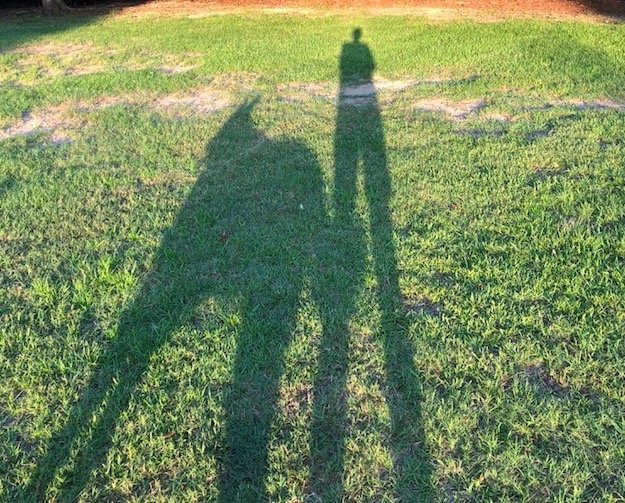
I like this picture of Benny and me, even though it’s not really of us, but of our shadows. Any viewer knows that a person and a dog stood in this grassy area at a time when the sun was low and that someone took a picture of the shadows and not the person or the dog. These shadows reach far into the yard, much farther than I could stretch my arms or legs. I now see this photo as a metaphor for the reach our lives have on others, even if we’re not physically in the picture.

Anyone who has lost a loved one knows that the presence of that loved one is felt long after he or she is gone. Time, like distance, may distort the loss, much in the same way that the closest shadows near our feet are over-large, whereas our heads, farther into the yard, are disproportionately smaller. This distortion doesn’t cause the viewer to doubt the existence of a person and a dog blocking the sun. But fortunately, the viewer also doesn’t have to put a monetary value on this loss of sunlight, unlike the experience that I had recently serving on a jury tasked with valuing the loss of a loved one’s “sunshine.”

In September 2018, I was part of a jury that was instructed to determine the dollar amounts to award to the widow and three adult children of a man who had died of lung cancer. In a previous trial, the defendant (Philip Morris) had been found guilty of contributing to the smoker’s death, and the plaintiffs (the family) had been awarded economic damages, those damages for which a dollar amount is more easily determined, like expenses and loss of income. For this follow-up trial, the jury was asked to determine the compensation for the family’s “pain and suffering.” So, our question was the following: what, if anything, should the family receive in damages for the emotional trauma they went through as a result of the death? This question proved to be even more difficult than I might have imagined, and I have some experience at valuing things that are difficult to put a dollar number on.

For twenty-five years, I worked for The Dow Chemical Company in research and development. At the time of my retirement, I was a Sr. Director in charge of Intellectual Capital Management. This group of experienced chemists and engineers worked to advise Dow’s businesses on the value and utilization of intellectual capital, which includes the corporation’s intangible assets:  ideas, inventions, and intellectual property, such as patents and trademarks. These assets are not the hard assets, like the bricks and mortar or financial holdings, but they are, as the definition of intangible implies, “not tangible, impalpable, an asset (such as goodwill) that is not corporeal, an abstract quality or attribute” (Merriam-Webster). If “pain and suffering” does not fit in the legal category of economic damages, then it must be considered an intangible, which can certainly have value. So, for the jury, we had to decide the value of this most uneconomic aspect of life, but I think there are parallels to the business world.

For us in the corporate environment, the value of intellectual capital was frequently hard to determine because not only was it usually an anticipated value, a possible future value, but it also was highly context-dependent. For example, an invention may be very valuable to a company that seeks a certain market position, yet not valuable to a company that has no interest in the same market. And in addition, market dynamics are notorious for being unpredictable. I discuss these considerations and others related to the management of intellectual capital in a book chapter published in Cultures of Copyright (Peter Lang, 2015). However, my corporate background did not prepare me for the jury deliberation as much as the intervening two months have, in which I’ve had time to consider the options and what we might have argued.

In this trial, the smoker was a white male, who died of lung cancer at age 42 after a year of illness. He left a wife and three children, ages (if I recall correctly) nine, sixteen, and twenty-one. His death left the family emotionally devastated, and they testified tearfully to the aftermath with its pain and suffering. The jury was told that in the previous trial the family had been awarded economic damages, but we didn’t know how much, nor could we do any background searching. Since we didn’t know how much money the family was awarded in the first trial, we had no idea if they had already received millions of dollars or a thousand dollars. We had to keep in mind that whatever the first settlement was, our decision was a separate issue. What we could know is what their counsel was asking for and what the defendant’s counsel said was a reasonable number. Counsel for the family asked for $1.3 million each for the widow and three children. The Defendant, Philip Morris, said that $50,000 each was a reasonable number. Given the wide disparity in these numbers, the jury had a difficult task, and it was made even more difficult by a similar disparity in the feelings and perceptions of jury members, perspectives that were based on the life experiences of each juror.

Some things we could agree on: the proposed $1.3 million seemed too high possibly because we had no data to justify it; no amount of money was going to bring back the deceased; and the family had, indeed, suffered as a result of the patriarch’s death. Beyond this consensus, our differences in opinion were more intense and more emotional.

The jury consisted of two men and four women. Four jurors felt, at first, that the family should receive nothing. The argument centered around considerations like these: if he had died from heart trouble, for example, the family would have suffered the same pain and suffering yet had no one to sue; money does not bring him back or end the suffering; and he had made a choice to smoke, knowing what the consequences might be. These attitudes came from jurors who had suffered significant personal losses of close family members, were veterans of wars, or were smokers themselves. The unwillingness to make Philip Morris pay for pain and suffering caught me by surprise, and I found the arguments difficult to refute.

I have not lost a close family member to cancer. I haven’t been in the military, and I don’t smoke. I personally could easily understand giving the family some sum that was in between the Plaintiff’s and the Defense’s proposals. Having been in a management role in a large corporation like Philip Morris, I knew how little even $500,000 actually is to such a company, and I could easily imagine how they might have been found contributory to the smoker’s death. But I found my suggestions on how to view why they deserved any compensation didn’t carry much weight.

After a heated deliberation, the best we could agree on was close to the Philip Morris number because even Philip Morris had said that $50,000 each was fair. We awarded the children each $50,000 and the widow $100,000. These numbers seemed like a lot of money to the other juror members, so the award seemed fair to them. I felt that I could live with this decision because $50,000 each might be significant to the family, even though I knew it was a drop in the bucket to Philip Morris. Since this verdict, I’ve had time to consider arguments for why and how much this family might have been awarded, but I’m no lawyer and have no idea which of these arguments could be used in a court of law.

My thought going into the jury deliberation was that we could arrive at a number somewhere between what the Plaintiffs were asking for and what Philip Morris stated was a fair amount. I hoped to agree to about $500,000. A number in this range is one that I could justify based on comparing the widow, for example, to what Philip Morris does for its employees if I considered what she would have cost the company in salary, benefits, and overhead if she had worked for Philip Morris for two years. The smoker suffered for a year battling the lung cancer with the widow caring for him, and then she spent most of another year settling matters after his death, so the situation could be viewed as though she were an employee. If other jurors had thought $500,000 was reasonable, we would have had a short deliberation. There are other ways I could rationalize more money than what we awarded.

Alternatively, we might have considered what the typical employee of Philip Morris might receive in compensation, such as life insurance, in the event of a similar death. The widow would have received some benefits if he had been a Philip Morris employee. What does Philip Morris do for its employee upon an untimely death?

But rather than viewing the family as an extension of Philip Morris employees, we might have taken an approach similar to how companies value something known as “goodwill.” Goodwill is an intangible asset that has value above those assets that can be exchanged, bought, sold, and traded. Goodwill can be defined and calculated in many ways, but a couple of simple ways to view it are the following:  1) for a publicly traded company, goodwill value can be thought of as the market value (stock price times number of outstanding shares) minus the value of the identifiable assets or 2) the purchase price of a company minus the company’s assets that have an identifiable economic value. Applying this view of “goodwill” to the family of the deceased smoker is relevant, but still hard to value.

The smoker had an economic value associated with his death, such as lost income, medical expenses, and funeral expenses, but the loss of his companionship to the widow and parenting to the children are part of his “goodwill” as a member of the family. What was the value of his personal goodwill? No one argues that corporate goodwill exists and is valued. Corporations pay millions and sometimes billions of dollars for goodwill. However, personal goodwill and the loss of it from the smoker’s family is not something Philip Morris and the Plaintiffs agreed on. He had no market value or purchase price from which to subtract his hard assets. But this disparity in valuing intangible assets is typical because the value of the asset is always situation dependent. His life meant something very different to his family than it could ever mean to a large corporation. But these obstacles shouldn’t mean that putting a dollar value on personal goodwill should be impossible.

A study of how corporate goodwill is calculated might shed light on ways that personal goodwill could be argued. For example, the value of Philip Morris’s corporate goodwill could be estimated and compared with its economic assets. Perhaps it’s a number like 50% above its hard assets. So then, what if personal goodwill could be estimated as a percent above the economic assets and other quantifiable numbers? Unfortunately, however, I understand from an attorney that none of these arguments is admissible in a Florida court.

Especially in light of the fact that arguments to justify awarding pain and suffering are not allowable in court, determining the specific value for compensation to a family is never going to be easy. Pain and suffering are not on a family’s balance sheet.  But pain and suffering are, however, quite tangible. They may not be a part of economic compensation, but money does alleviate some financial burdens, which also contribute to the pain and suffering. The definition of intangible is “incapable of being perceived by the sense of touch,” but intangibles are capable of being perceived by the heart, and juries should be able to have guidance in determining the value of personal goodwill to award. I wish that the State of Florida would reconsider the law around what is admissible in court.

As jurors, we knew that the lives of the family had been damaged by the loss of the husband and father, even though we never met him, and he was no longer in the picture. The shadow of his presence still stretches out into time in the lives of the family, and maybe, like Benny’s and my shadows, it becomes smaller and distorted, but it is still real nevertheless.


Written By Kathlene Rushing
Kathlene Rushing is a prolific writer with a passion for the Gulf Coast. Having lived on the coast for more than 10 years, she has a deep understanding of the culture and atmosphere that allows her to speak openly about all that Pensacola has to offer.
Author's Website: https://webnetmobilesites.com

Pensacola Treasures

Pensacola Treasures

Reflections of a reluctant author…

When the marketing person from my publisher first contacted me about joining a group of authors to write a blog, I was both intrigued and a bit intimidated.  I recently published a photo book of the cottages in the Pensacola Historic District, and consider myself primarily a photographer – the writing provided background and context for the photographs.  So to be given a task meant for “real writers”,  in the company of “real authors” was a bit frightening.  What do I have to write about?

I was instructed to write about what I’m interested in & passionate about.  So here you will find my musings on photography, Pensacola historic districts and preservation, first time “authorship”, and anything else that happens to be on my mind…

So, on my mind today:  Having just launched the book, many people have asked “How did you come to write (again, using “write” as a loose term) this book?”  And they mean – why this subject?  Well, the photos came first…

Although Pensacola is my hometown, I moved away in my early twenties and came back six years ago.  In that span of time Pensacola has made some drastic changes (for the better) that led me to spend a lot of time downtown (New shops! Good restaurants!)  My love of shopping & eating eventually led to walking around the Seville area for exercise, and awareness of the differences between downtown Pensacola and the homogeneity of the New Tampa neighborhoods from which I had recently come.

At first it was a bit disturbing – above ground electric lines (ugghh), unkept yards (What? no neighborhood covenants?)  But the more I looked, I began to see the things that did not exist in New Tampa – the beautiful patina of old wood, decorative scrollwork on turn of the century homes, … HISTORY, charm!  So after snapping the first photo of a beautiful cottage, I became enamored with these older homes.  I developed a love for the aesthetic of these cottages and their surroundings.  In time, I had accumulated about 60 photos of really cool historic, charming dwellings.   

And around that time I began to notice some older buildings being demolished to make way for new development.  It occurred to me that eventually some of my beloved cottages could suffer the same fate.  A quote I ran across once came to mind:

“In the end, we will conserve only what we love; we will love only what we understand and we will understand only what we are taught.”  -Baba Dioum    

So with the hope that others could share my appreciation for Pensacola’s oldest neighborhood, I decided to move forward with the concept of the book “Cottage Charm in Historic Seville”.   

The Pensacola Historic District is a place that continues to engage me visually, and I love learning more about the folks that built the early dwellings in the neighborhood.  In this blog I will touch on these topics.  For me, the most fulfilling part about publishing this book has been hearing from people who have an association with one of these cottages.  If you have any info on early residents from the district I would love to hear from you!


For more information about Cottage Charm in Historic Seville go to:  PensacolaTreasures.com and PensacolaTreasures1821 on Instagram

Sharon can be contacted at PensacolaTreasures@gmail.com


Written By Sharon Duplantis
Posted on

A Walk Back In Time…

A Walk Back In Time…

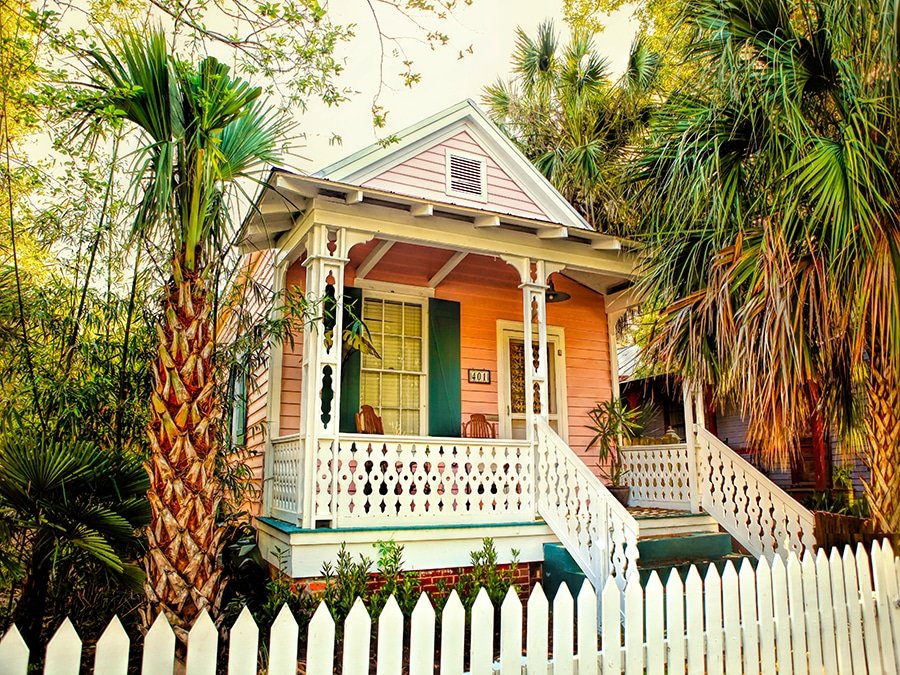
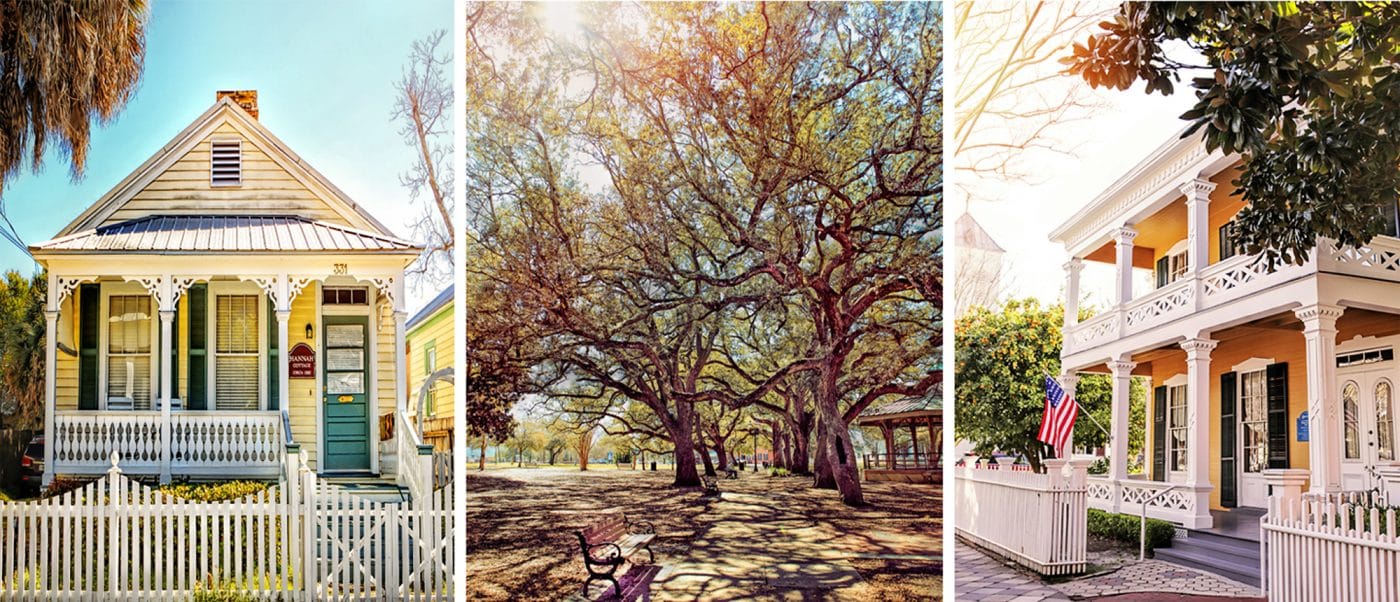
Shortly after moving back to Pensacola I began walking through the Pensacola Historic District a few times a week.  Exercise was my excuse, but mainly I do it because I’m fascinated by the architecture and surroundings.  Shade is supplied by a canopy of sprawling live oaks.  The landscape is dotted with stately old magnolias, Seville orange trees (those bitter oranges brought here by the Spanish), and cabbage palms mixed with overgrown gangly azaleas in reds & bright pinks.  Bees buzz through flowering vines draped across rickety pickets, alongside meandering butterflies and past the occasional cat lolling on a front porch… nothing like the typical manicured neighborhoods I’d become accustomed to, & way more interesting.  History is apparent everywhere – in the landscape and the architecture.

Developing over a 200 year period, this neighborhood features a diverse collection of period structures – from grand homes built for the Who’s Who of the time, to tiny Creole Cottages and shotgun houses built as rentals for the working class.  The details fascinate me… beautifully patinated raw wood fences, delicate jigsaw appliqué, turned balusters, and decorative brackets…I’m most impressed by the simplest cottages trimmed with all the details.  I love that someone cared for their tiny home so much to embellish it that way.

It’s quiet here.  Even though all manner of construction (and a bit of destruction) is happening just blocks away.  The cats don’t care (nor the birds or butterflies).  The pace here is slow and lazy, contemplative and inspirational.

Walk with me for just a block…notice a few highlights:  starting in Seville Square (called “the Green” in that era), look west to see Old Christ Church, circa 1832, one of the oldest buildings of worship left standing in Florida.  Next door is a beautiful example of post civil war Greek Revival architecture, circa 1871.  This home was built for the family of Clara Barkley Dorr (daughter of Charles Barkley) after the death of her husband, a local lumber executive.  Look north to see some of the larger homes in the district, most built in the mid 19th century – one of them a Baptist Parsonage, another belonging to William Anderson who served as mayor in 1893; and the Steamboat House, circa 1857, a unique home considered an excellent example of the “Steamboat Gothic” style of architecture.

Turn right onto Government street… looking to the right you’ll see the pink restaurant now called Dharma Blue, circa 1880.  A few homes down on the left is St. Michael’s Creole Benevolent House, circa 1895, which served as a meeting hall for Pensacola Creoles of Spanish-Negro descent.  Many of the modest homes on this end of Government belonged to Creoles who were predominately barbers and musicians, one of them housing the nephew of Salvador Pons, who was mayor in 1874.  Looking again to the right, notice a very simple tin-roofed home known as Susannah’s Cottage, circa 1800.  On the 1820 census she was listed as simply “Ma Susana, age 40, single negro washer woman”.

Turning right onto South Florida Blanca, you’ll notice two very similar homes side by side.  Sporting beautifuly weathered unpainted wood siding, they were built for brothers who were sea captains, one of whom died after being swept off his ship in a storm (yes, there are ghost stories about that!  I’ve heard it referred to as “the Boo Radley”)  At the end of Florida Blanca, with a great view of the bay sits the Barkley House, circa 1812.  One of the most notable homes of the time, the Barkley House was a hub of social and political activity in that era, as it’s owners played host to Pensacola’s most prominent citizens.  I could go on, but you get the picture (love those photography puns!)  These details are tiny fragments of the history contained in the 36 blocks that make up the Pensacola Historic District.

This neighborhood represents the aesthetic and cultural essence of Pensacola.  It’s as much of an attraction as the T. T. Wentworth Museum or the Pensacola Museum of Art.  It’s a living, breathing museum.   Something we should nurture, be proud of, and share with visitors.  So check it out – take a walk sometime…


For more information about Cottage Charm in Historic Seville go to:  PensacolaTreasures.com and PensacolaTreasures1821 on Instagram

Sharon can be contacted at PensacolaTreasures@gmail.com


Written By Sharon Duplantis

The House On Lot 23

The House On Lot 23

House on Lot 23

The history of Pensacola is rich and enduring, indeed. Known as the “City of Five Flags,” Pensacola has been under the control of five nations since its inception in 1559–Spain, France, England, the Confederacy, and the United States. Consequently, various architectural influences are evident in much of Pensacola’s historic architecture. During the Third Spanish Period (1781-1821), the Isaac Wright House–a modest cottage that has long piqued my interest–was constructed at what is now 431 E. Zaragoza St. in historic downtown Pensacola.

This quaint cottage, as one might expect from a structure initially built approximately 200 years ago, is somewhat shrouded in mystery. A plaque posted next to the front door indicates the house was built in the 1790s. However, there has been contention about the interpretation of historical documents, land deeds, and court records. Leora “Lee” Sutton (1917-2018), prolific Pensacola historian, conducted research on the Isaac Wright House and exposed key discrepancies. Sutton’s research revealed that—contrary to information provided in the Historic American Buildings Survey (HABS) regarding Pensacola’s purported oldest remaining building, which indicates the house located at 431 E. Zaragoza Street is situated on Lot 21 and is associated with Carlos Baron—the Isaac Wright House is in fact located on Lot 23, and no discernable historical records indicate an association with the aforementioned Baron.

During the early 19th century, land deeds were not required to be recorded at the Escambia County Court House, making historic architectural research in Pensacola a bit difficult. Miss Sutton, however, worked closely with Herschel Richards, who purchased the Isaac Wright House in 1944, to fill in the gaps created by inadequate land deed record keeping. Mr. Richards possessed deeds dating back to 1846, when Don Francisco Moreno (1792-1882)–prominent Pensacola banker, politician, and businessman–owned the cottage. Through her efforts, Sutton was able to recognize an apparent error in HABS records—records that associated this iconic property with Lot 21 and a man named Carlos Baron.

Without rehashing the long list of property ownership, I will say this: even a cursory glance of historical documentation related to the Isaac Wright House will reveal that being an historian is much like being a detective. History is not always as it seems. What is clear may not be true. Historians must piece together artifacts much like a puzzle, and, in the same vein, the final product cannot be contrived—the pieces cannot be forced. The mysteries of history are what fascinate me and going to the archives and getting my hands dirty, so to speak, is exciting. Give it a try; you may very well fall in love with history as well.

Sources:

Leora Sutton to Mr. Newton, Dr. Schaeffer, and Linda Ellsworth, May 22, 1970, Pensacola Historical Society.


Written By Kathlene Rushing
Kathlene Rushing is a prolific writer with a passion for the Gulf Coast. Having lived on the coast for more than 10 years, she has a deep understanding of the culture and atmosphere that allows her to speak openly about all that Pensacola has to offer.
Author's Website: https://webnetmobilesites.com

Music That Inspires And Showcases Our City

Music That Inspires And Showcases Our City

One of the greatest things I have loved about Pensacola, Florida is the variety of musicians that come through our little big town.  I’ve lived many places but for a town whose population is around 55K people, we have some of the best and most talented musicians you will find anywhere.  It is not unusual to find live music playing every night in some restaurant in Pensacola, Florida. Pensacola Bay Center does a great job of bringing the biggest names in music to our city from Elton John to the Newsboys.

Live Music and Nightlife

If you are thinking about moving to a city where opportunities are high and talent is much appreciated, then Pensacola is your destination.  We love great music here.  Songwriters, indie artists, jazz musicians, and folk style music are some of our favorites and certainly most captivating after a long week.  So gather with all of us on any Friday night, somewhere in Pensacola, and you will find a favorite song, a new favorite lyric, or a song that just makes you feel better than you did before you heard it.

Isn’t it funny how music knows no barriers, brings strangers together, and unites people who have differences in one room with as little as one guitar and a great song.  That’s what I love about music.  It calms the soul, stills the aching heart, binds up wounds and creates new relationships over a cup of coffee, a glass of wine, or a burger and fries.  I hope that if you read this blog post, you will think and listen to a song that makes life feel just a little bit better, and that you will find some local restaurant, bar, or concert to listen to in our great city.


Written By PensacolaFlorida.com
Posted on

Kaboom

Kaboom

My momma hated them. My dog loathes them even more so. Actually, I love them, especially if I can stay home and read a great book. I’m referring to thunderstorms, of course. Florida is ripe with them if you haven’t noticed. It’s one of the blessings of living here. Yes, a blessing! Don’t you realize that people in other parts of the country must either water their lawn daily or are on rotations and rationing systems? I’m an avid flower-bed planter, flower-lover, and, alas, a flower-killer because when God isn’t watering the flowers, I’m usually not either. So, yes, I’m thankful for our rainfall on most days.

Lightning in Pensacola

However, there is a downside…the danger of being struck by lightning. Have you ever been enjoying a nice day at the beach, relaxing in your reclining surf chair after a leisurely dip in the refreshing gulf…and just when you’re about to drift off, you hear it? KaBoom! You turn to see an ominous, dark cloud north of you. What should you do?

Most of us can remember those moms who panicked in storms, who had us all come inside, turn off the lights, stop all activity (as if we’d personally draw lightning bolts by moving or speaking), and hunker down. Do you remember that? Or perhaps you had a scientific parent, one who taught you to respect the storm but said it was just “clouds bumping into each other” or some sort of explanation like that. Whichever we’ve experienced, most of us carry those early instructions within our psyche. But, really, what are we supposed to do when caught in a thunderstorm?

What are the facts?

According to accuweather.com, Florida is the lightning capital of the U.S. It has much to do with our tropical climate and the fact that we are surrounded by water on three sides. What should you do if a thunderstorm rolls in while you are relaxing at the beach? Guess what? Your mom was right…you need to get inside. If you are at the beach, head for your car. Storms come up quickly and at the beach, you’ll be the tallest thing around, hence, just what a lightning bolt will find. Get off the beach! If that is impossible, get low. Hunker down between the dunes away from the water. The very best place is to be inside a building. The shelters or tents at a campground are not safe; get in either a car or better yet, into a building.

The plans of mice and men… It would be ideal to plan for the weather. But, we all know that this is tricky at best for a Floridian as storms of this sort come up with tiresome regularity. So we do our best, plan for it and be smart. We’ve all heard of the “dog days” of summer, those sweltering hot months of July and August when even the dogs don’t want to be outside. These are the days in which we enjoy the ole AC, a tall glass of tea while we sit and pet Roxy.

So what do you do if you’re driven indoors? Certainly, there are alternatives to outdoor activities, cool things to do inside. Floridians typically have a cache of candles ready in case the electricity goes out and a flashlight or two handy, even now with our iPhones and iPads. I suggest ditching the electronics and experiencing the storm, from the inside. Make it a joy. If you don’t want to read, you can always just sit quietly and listen to the falling rain. There’s always a board game to play with the kids. A rainy afternoon is perfect for Settlers of Catan, our family’s favorite game. Do you play an instrument? I play the piano and it seems more exciting with a storm raging outside. Whatever you decide to do, make sure it is a pause, a rest of some kind. For me, a thunderstorm gives me that pause, permission if you will, to play, create, and rest.


Written By Katherine Imogene Youngblood
Posted on

Rockettes

Rockettes

Family: My father and I loved to watch the variety shows. We would sit in front of the TV for hours watching The Dinah Shore Show, Red Buttons, Jimmy Durante and Ted Max. We watched them all, usually while we watched we ate popcorn and drank Kool-Aid. although sometimes we ate genoa salami. When we ate the salami we drank iced water, Daddy said I made the best iced water. It was while we were watching the Ted Max Amateur Hour that I fell in love with Julius La Rosa. When he sang, ‘when the moon hits your eye like a big pizza pie it’s amore’, my heart melted. Although I truly loved Julius and vowed that I would one day marry him it was the Rockettes that fully occupied my imagination. I couldn’t get enough of those beautiful ladies prancing around in their feathered bathing suit get-ups, and their extraordinary plumed headdresses.

When Daddy laughed at Red Button’s silly jokes I laughed too; not because  I thought that the jokes were so funny but because nothing made me happier than the sound of my father’s laughter. All in all my dad was full of laughter, jokes and foolishness. My mother however was all business, no foolishness what-so -ever. Mom was a good and kind church going lady, everyone loved her, Daddy adored her. He seldom went to church, but my mother made certain that my brothers and I were regular church goers. . . each and every single time the church doors were open there we were. Actually I really enjoyed church time. There was lots of singing and plenty of time to look out the window, daydream and indulge in church thoughts. That was a big drawing point for me. What I really enjoyed the most was when the choir sang  Praise God from whom all blessings flow as the deacons passed the collection plate. Yes, that was my all time favorite, however. . . I thought that if the preacher could get the Rockettes to dance down the aisle and pass the collection plate, instead of the musty old deacons doing it, he would get a lot more collection.

Friends etc.: I squeezed in beside Jean Ann at her desk. We were both pretty skinny, so I figured we could both fit into the one seat. Besides the entire first session class was still sitting in their seats, so I really didn’t have much  of a choice. Mister Vorus (the most feared sixth grade teacher in the history of Forest Hills Elementary School) sat at his desk twirling his pen between his fingers. Then he stopped twirling the pen and tapped the dreaded write a note home to your parents tablet. Most everyday he just tapped the tablet but when he was feeling particularly cranky he would announce to the class that he really felt like writing a note home and he would be looking for his chance. Jean Ann looked at me, I held my breath. He didn’t say it, maybe he didn’t feel like writing any notes today. Then he spoke.

“Okay class, I want a three page essay on my desk tomorrow about what happened in here today, front and back. Joyce, do you have anything to say? Should I write a note home? he pulled the tablet closer.

“I guess if you feel like it.” I mumbled. A wave of gasps rolled across the room, all eyes were on me. What was the big deal? I was just trying to be polite. Mister Vorus scribbled a note home for both Jean Ann and me.

My mother was hanging clothes on the clothes line when I got home from school. I looked at the note that Mister Vorus had written. I would not be allowed back in class unless she accompanied me the next day. Like I didn’t know that meant it would be a big ‘ol conference between Mom and Mister Vorus, the principal and the Physical Ed coach; and for all I knew everyone else and the janitor. What I did know for sure was that I was going to be in big trouble, and so was Jean Ann. Probably her mother would tell her that she can’t ever hang around with me again; again for the umpteenth time. It wasn’t even all that bad I thought as I durged out to the back yard and over to the clothes line.

“Hi Sweetie, this morning there were six humming birds perched on the clothes line. They were so tiny I thought they were clothes pins.” She smiled and picked a towel out of the basket and hung it up. Then she turned to me. I handed her the note. I wanted to run back to my room lock the door and hide under my bed; but she had long since pounded the lock off the door with a hammer. Oh well, no place to run no place to hide, probably won’t be so bad anyway, maybe.

“What’s this?” it wasn’t a friendly what’s this. And she was in such a good mood before, with the humming birds and clothes pins and all. Oh geeze not good.

“It’s a note from Mister Vorus,” I looked at my feet. I didn’t make eye contact, I was afraid I might turn to stone if I did.

“This says that you can’t come back to class unless I bring you. What on earth did you do?”

“I didn’t do anything, really.” Still not making eye contact.

“You don’t bring a note like this home for not really doing anything. What happened Joyce?” Mom was relentless.

“I found a dragonfly on the playground.”

“And that’s what you are in trouble for? That’s ridiculous.”

“No Mother , I just said hi to Jean Ann through the window.”

“Oh, so you interrupted the class and got in trouble with Mister Vorus.”

“No, Mister Vorus wasn’t in the classroom.” I made eye contact for just a moment. It sounded like she was going to be reasonable this time. It looked like I could be wrong, time to abort. I quickly broke eye contact.

“Mister Vorus wasn’t even in the room? Joyce just tell me exactly what happened. Start from the beginning, no foolishness.” She hung up the last towel, leaned against the clothesline pole and seemed to brace herself.

“Ok this is what happened Mother,” I began.” I got to school really early today and the first session wasn’t out yet. So I walked around the playground for awhile. Then I found a dragon fly, he was dead, but he was the biggest dragonfly I’ve ever seen. He was really huge, Mom.” My excitement was lost on her. “Anyway I picked him up and went and sat under the class room window. I was just sitting there under the window looking at him thinking what I would name him when Jean Ann came over to sharpen her pencil. I said hi Jean Ann and she asked me what I was doing. I lifted Bosco up so she could see him. That’s what I named him Bosco. I decided that would be a good name for him.”

“Why did you choose Bosco? That’s the dog’s name.” Her voice cracked.

“Well, I like Bosco but he’s the boys dog so I named my dragonfly Bosco so I would have a Bosco of my own. Don’t you like Bosco Mother?” Deflect defense.

“A dead dragonfly pet named Bosco Joyce? Of course I like Bosco why would you even ask that?” Mom was off topic, this was good. “Just tell me what happened, no more sidetracks Joyce.” Shucks back on topic, curses foiled again. So I continued.

“Then Jean Ann said to put it through the  window so she could see it better. I said ok but for her to be careful and don’t break him because I was going to scare someone with him.”

“Who were you planning to scare Joyce?” Ah, good off topic again.

“Err um, Jimbo I was going to scare Jimbo when he was asleep. I was really planning on scaring mom by putting it on top of the dinner plates, but I decided to keep that gem to myself.

“You shouldn’t tease your little brother. Go on Joyce.”

“Well then I put it through the window.” I hesitated.

“Go on Joyce. I’m sure that isn’t the end of this story.” Mom shook her head. Her flaming red hair flounced. She looked at me over the top of her cat-eye glasses. She reminded me of Lucille Ball when Ricky is desperately trying to ‘splane something. I was going to mention that but decided that might be pressing my luck. I began again.

“Then Jean Ann took Bosco and held him up for the class to see and said, Hey, look at this. That’s when Todd grabbed Bosco away from Jean Ann and started chasing Margie around the room with him. He was running right behind her with Bosco in his hand , and you know she has that really long ponytail that goes all the way down to her waist. Well, Todd put the dragonfly into Margie’s pony tail. Then Margie really started screaming  and running and shaking her head trying to get Bosco out of her hair. What she didn’t know was that he had gotten flung out and landed on Brenda. Then someone put Bosco down Brenda’s blouse, maybe it was Jean Ann, I don’t know. Anyway Brenda’s pretty chubby, and she has really big boobies. So when she started running all the boys started running after her because they wanted to see if Kleenex flew out of her bra. So there she was running and pulling at the neck of her shirt and screaming to high heaven. The boys were still running behind her but there were no Kleenexes that I saw.  By then the whole class was running around back and forth in the room, except Mike. He was swinging around in the rafters like a trapeze guy, it was pretty neat. You know it’s a portable classroom, so it was really starting to rock. That’s when Old Miss Mendez came in. She took one look and turned around and ran to get Mister Vorus; what a tattle tale. I don’t even know how this is all my fault. I wasn’t even in there.”

“Where were you, Joyce? You’re too short to see into that window.”

“Oh, I pushed the playground trashcan to the window so I could put Bosco through and see in. I shouldn’t have done that. I knew he was going to get broken, darn it. And that’s how I scraped my knee.” I lifted the hem of my dress above my knee, I figured I should show the boo-boo now.

“Good lord, How did that happen and who bandaged it?” Mom, the ex army nurse was inspecting the dressing.

“The ambulance guys.” I whispered.

“What, who called the ambulance, and why?”

“The principal because I was stuck, kind of folded over, and they were afraid to move me. But I wiggled free before the guys got there so they just looked at me and said I was okay and bandaged my knee. See it’s alright.” I can-can kicked up my boo-boo leg to prove my point.

“Stuck? What do you mean, where were you stuck?”

“It’s like this Mom. When I saw Miss Mendez come in I tried to jump off the trash can real quick, but the lid flipped and I fell into the can. I was afraid to come out and anyway I was stuck in there. Then the coach and the janitor came over to get me out because they saw me fall in. But when they saw me all folded up in the can they didn’t know what to do next in case I was really hurt. Then the janitor ran to get the principal and the rest is history. Sorry Mom.” I finally made eye contact again. There was a tear welling up in my mother’s eye and she was biting her bottom lip. She slid down the clothesline pole to the ground. She sat under the clothesline that afternoon and laughed harder than I ever saw her laugh before. To this day I’m not really certain if it was genuine laughter or hysterics.


Written By Joyce Muzzio
Posted on

Take A Micro-Vacation: Tips For You Next Vacation Days

Take A Micro-Vacation: Tips For You Next Vacation Days

Sometimes, I need to relax and rejuvenate—take a “micro-vacation.” Certain places—like the beach or art galleries—give me these micro-vacations. When I sat down to write this post, I realized why, and that water somehow plays a role. At the beach, watching the breaking waves and wading wildlife reaffirms life’s rhythms, and the dynamic, colorful scenes provide endless beauty. Likewise, at art galleries, I also find color and rhythm, even in the abstract. For me, art is like water for the soul, and I feel fortunate to live in a place with both physical water and metaphorical water.

Quick Travels To Pensacola

One oasis for the soul can be found at Quayside Art Gallery, located at 17 E. Zarragossa Street in Pensacola (https://www.quaysidegallery.com/). Recently voted by VIP Magazine the “Best Art Gallery” in Pensacola, Quayside is not the typical commercial art gallery because it’s owned and operated by around 100 local artists. This community of artists has been evolving for more than forty years. These people give it a heart and soul not found in a single-owner gallery. I know because I’ve worked there for a few years and know the artists.

The gallery began in 1973 on South Palafox Street and moved to its current location, the old Germania Firehouse, in 1983. Not only do the artists give the gallery character, but so does the building. Built in 1873, it housed one of Pensacola’s first fire brigades during an era when fire was a serious problem. It even has a history of being haunted, as documented in an article, entitled “Haunted Truck House,” in the Pensacola Daily News, December 2, 1892. The story reports the encounter of two firemen with a spirit or ghost. And strange things continue to happen to this day. Ask any of the long-time members. But for those of you who aren’t interested in ghost tales, the gallery has plenty to offer as the largest cooperative art gallery in the Southeast.

Three floors of art are waiting for the art enthusiast, the casual tourist, or school children. The art is both 2D and 3D in many media and materials: paintings (acrylic, oil, watercolor, pastel, mixed media), drawings, photography, jewelry, stained glass, dyed textiles, wooden items, and ceramic ware. The gallery even has a Historic Quayside Art Gallery Cookbook and aprons. Expect the east end of the first floor to have a special show featuring one or more artists. And the west end contains samples of art from many artists. All of these can be found on the first floor, but that’s not all.

A short second floor has bins of affordable, unframed art. On the third floor are bays of art where each artist has wall space or a pedestal display area. Unfortunately, the building does not have an elevator, so stairs may be a barrier to exploring the second and third floors for those who have mobility constraints. On all floors, one can browse in a calm, air-conditioned, quiet atmosphere—usually.

Special events can turn this quiet gallery into a livelier oasis. Gallery Nights (the third Friday of each month) can draw a couple of hundred visitors. One or more artists may do demos, like turning wood on a lathe or drawing portraits. Non-alcoholic drinks and light snacks are usually available. Other busy evenings are whenever the east gallery show changes, and the exhibiting artists hold a reception. These events are well-attended, possibly helped by the free wine and hors-d’oeuvres. Crowds can ebb and flow with the seasons. In the cooler months when darkness arrives early, the gallery lights and warmth attract people like moths to a flame, especially around the holidays.

Starting in mid-November, the artists adorn Christmas trees with affordable, hand-made ornaments, and many artists choose to display more items, like smaller works of art or creative pieces, which make unique gifts—ones you won’t find at the mall or in a department store. When I work at the desk, I frequently see customers leave feeling that they found a “treasure” for a friend, or for themselves.

Ironically, as I was drafting this blog, a piece appeared in the Pensacola News Journal on Friday, July 27, 2018, about construction workers finding evidence of old wells along Jefferson Street, which runs along the east side of Quayside Art Gallery. Construction by Gulf Power has been underway to bury new power lines and upgrade the downtown power grid. The PNJ article quotes Elizabeth Benchley, director of the University of West Florida Archeology Institute. She says, “The heart of the colonial town was like an island with wetlands all the way around it … we filled all those wetlands with trash and building debris and everybody thinks that this is dry ground.” The article went on to explain how the wells were dug and how barrels were placed in the bottoms to define the well shafts. After the wells fell into disuse, the town residents filled them with trash. This story sounded familiar.

Several years ago, I attended a workshop for writers, artists, and musicians.  One evening, Eugene Peterson, author of The Message, delivered a homily in which he said that creative artists are like Isaac digging out Abraham’s wells. And I thought, “Wait… What?” He explained that in the twenty-sixth chapter of Genesis, Isaac cleaned out the wells that his father, Abraham, had originally dug. The Philistines had filled them with dirt and garbage so that they no longer held water, a necessity for life. Eugene’s point was that our modern lifestyle can fill our spirits with garbage, and the creative arts help to remove that “garbage” so that “water” can flow in.

For me, Eugene’s metaphor is so true because, coincidentally, Pensacola’s “Best Art Gallery” is located along a street that used to contain wells that were then abandoned and filled with trash. But now in modern times, the wells are being excavated while the artists at Quayside are attempting to push aside our social garbage and supply Pensacola with that much-needed “water for the soul.” If you have any interest in art, it’s a place that can give you a micro-vacation. Its hours of operation are Monday through Saturday 10 a.m. to 5 p.m. and Sundays 1–5:00 p.m., phone (850) 438-2363.


N. J. Schrock
Website: njschrock.com
Instagram and Twitter: @NJSchrock1
Facebook: https://www.facebook.com/NJSchrock1/?ref=settings


Written By PensacolaFlorida.com
Posted on

About A House

About A House

Once
It was always there.
We gathered,
Hunted through bedrooms
Drank glass-bottled Coca-Cola
(That only Grandma allowed)
And listened to our mothers laugh
With stories of remembered this and that
While pots of greens and peas waited
And cornbread heated up the place.
Three stories of questions.
Whose room was this?
The mirrored dressing table,
Missing the once bright maiden.
The son’s old zeppelin tilted
Against the wall,
Oh, that’s Jack’s old thing.
Imagined beasts
Contained
Among dusty ancient
Shadows, Basement
Inventions.
The Pecan tree, bare arms rising,
Giving to welcome us home.
Ring rosey ‘round your trunk
Your leaves, unremitting.
Still.
Sitting, long
Creaking chairs that joined
The everlasting conversations
That enclosed overhead,
Enveloping me long after
The waking hours.
Momma’s practiced hand
At the radiator dismissing the cold
Those mornings.
Porch gliding,
Grow-ups laughing,
Talking big on front lawns.
Same spot pictures
Of all of us in bunches
Marking years.
Perennial as ivy climbing up
Brick steps higher,
Higher.
       Years grown,
       Departed.
       Gone,
       Giving to welcome us home.

Now that I’ve settled down in one place, a beached wanderer I’d like to think, I’ve fallen in love hard with Pensacola. I had the pleasure of living on Gonzalez Street in East Hill for a few years when my children were young. Just living there in a house that was built in 1910 stirred my imagination intensely. Back in the day, streetcars ran by very near, conveying folks to downtown shops and shows just minutes away.  As I sat there on the porch, creaking in the swing with my two boys, we’d watch people as they’d get off at the corner bus stop. I couldn’t help but imagine the screeching of a streetcar against metal rails and picture ladies in their long sheath dresses alighting, holding their broad-brimmed hats, careful not to trip on the bricked roads as they made their way home. Inside, the gaslight fireplaces stood guard in each room. The old ornamental ceilings reminded us of days, years gone by, at how people cared deeply for craft and art and doing a job well. My personal favorite was the bathroom with the old fixtures, the claw tub, the black and white tile. Some things shouldn’t change, shouldn’t be upgraded. History is made to be admired, researched and pondered, learned from. Living in that house, I’m certain, was the genesis of my interest in writing historical fiction. It’s as if houses themselves have life in them. What we bring but also what we’ve left there.

Now that I’m a grandmother, gathering little ones together in my home, sitting on my own front porch, clutching my favorite coffee mug, watching my curly-headed babes run and play, my thoughts inevitably turn back to my own grandma’s house in Meridian, MS. This is where the Youngbloods would convene, merging forces and easing into their familiar style of story upon interrupted story.  I didn’t get to see Grandma much since we lived far away for most of my childhood, but when we did visit it was quite an experience far different from my life on the go. As authentic and pure as her fried okra, Grandma’s beguilingly unhurried manner cast a life-long southern spell upon me. But, what was as equally fascinating to me were my memories of her old house on Sixteenth Avenue. It was a treasure! Days we spent there were filled with discovery, of old, discarded items my mother would remark over, times of gathering pecans for pies out back, going down into scary basements, and simply the wonder of old gadgets that still worked. This was back in the days when parents expected kids to “run and play” and leave them alone in their conversations. It was up to us not to get hurt. So most days we’d be off to hunt things and explore, both inside and out.

I’m sad to say that my Grandma’s house is gone now.  It didn’t make the cut for neighborhood renewal. Not long ago, I drove down Sixteenth Avenue and tearfully sat in front of the empty lot, noting that even the porch steps were gone. Perhaps the house couldn’t survive without her, so it quietly died one day after she’d left the earth. Sitting there in my car with weeping eyes, I spied the only remaining recognizable evidence of our gatherings and our life there. It was the old pecan tree, arms still rising, there in the backyard. But it looked utterly sad too.

Drive along in the downtown area of Anytown, USA, you’ll see dozens of old houses, the older the city, the better. Pensacola, being one of the oldest cities in America, dating back to the 1500s, has time-honored homes in several neighborhoods of note, the most famous being the North Hill and East Hill communities. But, hey, don’t stop there! Head for the less celebrated areas. There’s the Navy Point community and the East Pensacola Heights community, both of which are in Pensacola proper. Generations born, lives lived, and now gone from them, these homes have retained their glory, the personalities of their owners. Go discover something new (and old).

Enjoy your wanderings!

~Kate


Written By Katherine Imogene Youngblood
Posted on